


6 Amazing Flux Copilot Prompts for Hardware Design in 2026

Flux designs electronics and mechanical parts from a plain-language prompt. It draws the schematic, routes the board, models the case, and checks its own work in simulation.
Every example below ran in Flux exactly as written. Each one shows the prompt, what Flux made, and screenshots from the Flux editor. Copy a prompt, or open the example project and try it yourself.
What a good prompt says
- What the product must do: its functions.
- The limits it must meet: battery life, size, cost, environment, and standards.
- What matters most: which requirement wins when two of them conflict.
Start with who uses the product and why. That context lets Flux make the same trade-offs that you would make.
Electronics from scratch
Example: Power supply for a warehouse robot
Our warehouse robot runs on a 12 V battery. Its controller board needs 3.3 V at up to 2 A, and it must not reset when the drive motors start and the load jumps. Design the power supply and show in a simulation that the voltage stays in range during the load jump. Reliability matters more than board size.
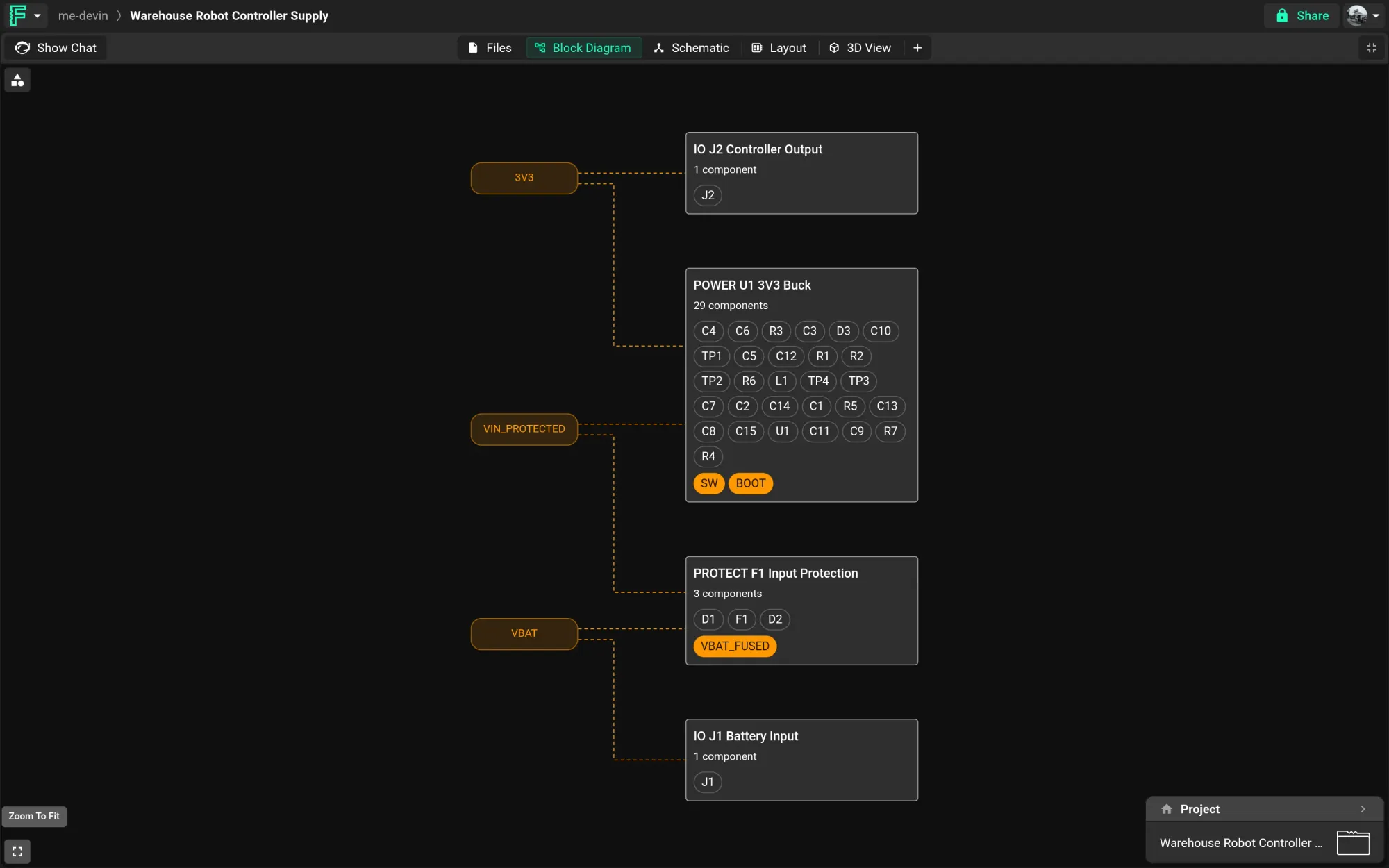
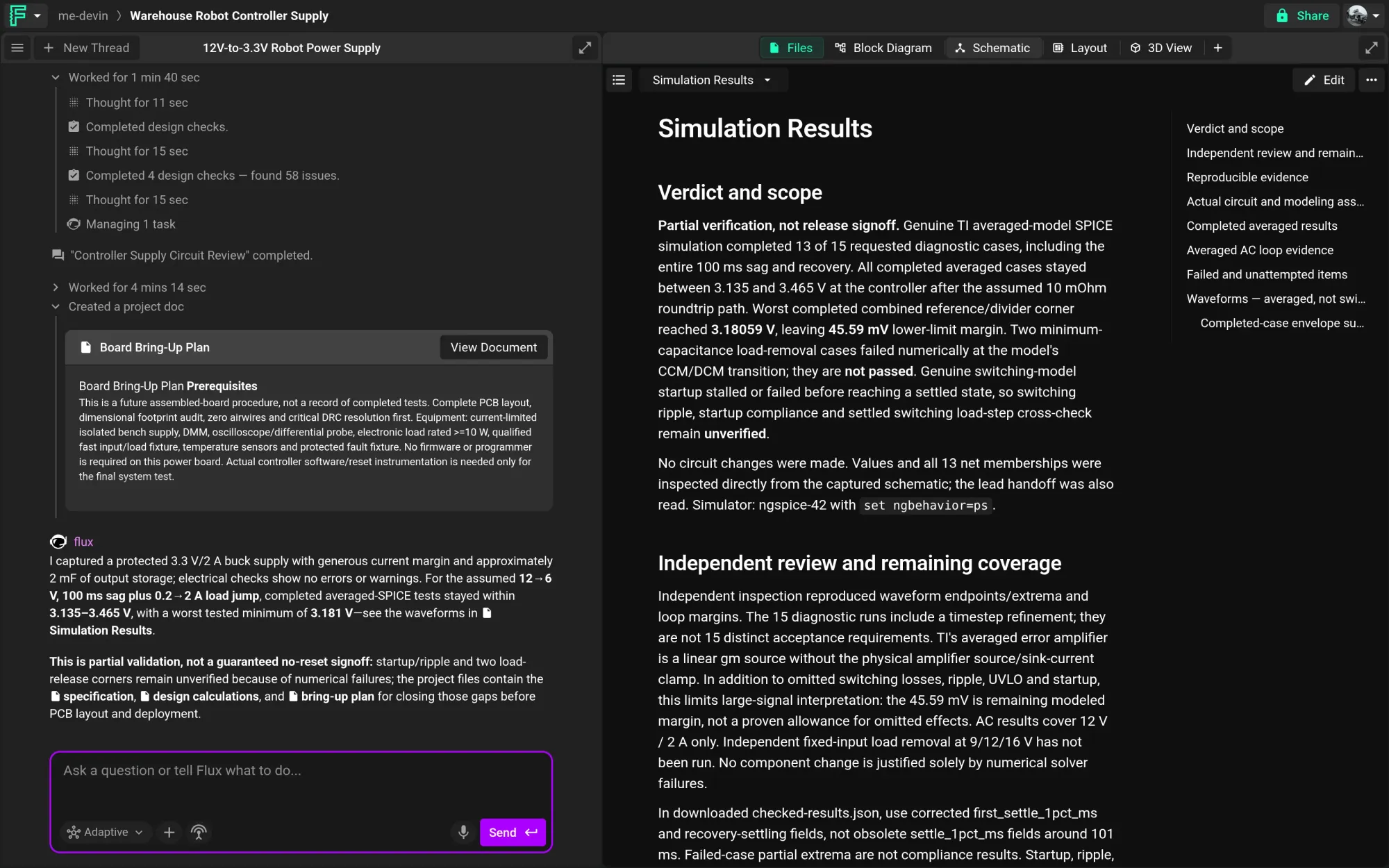
What Flux made: A 12 V to 3.3 V power supply circuit and a simulation of the load jump. In the simulated cases, the lowest voltage was 3.181 V, inside the allowed range of 3.135 V to 3.465 V. Flux also listed the cases it could not simulate yet, so you know what to test on the bench. The block diagram shows the battery input, the input protection, the 3.3 V buck converter, and the output to the controller board.
Mechanical design from scratch
Example: Camera bracket for a tunnel wall
We install traffic cameras on concrete tunnel walls. Design an aluminum bracket that holds a 2 kg camera 150 mm out from the wall, fixed with M5 anchors, and survives years of vibration from passing trucks. Show me the stress and the safety factor. Safety matters more than weight and cost.
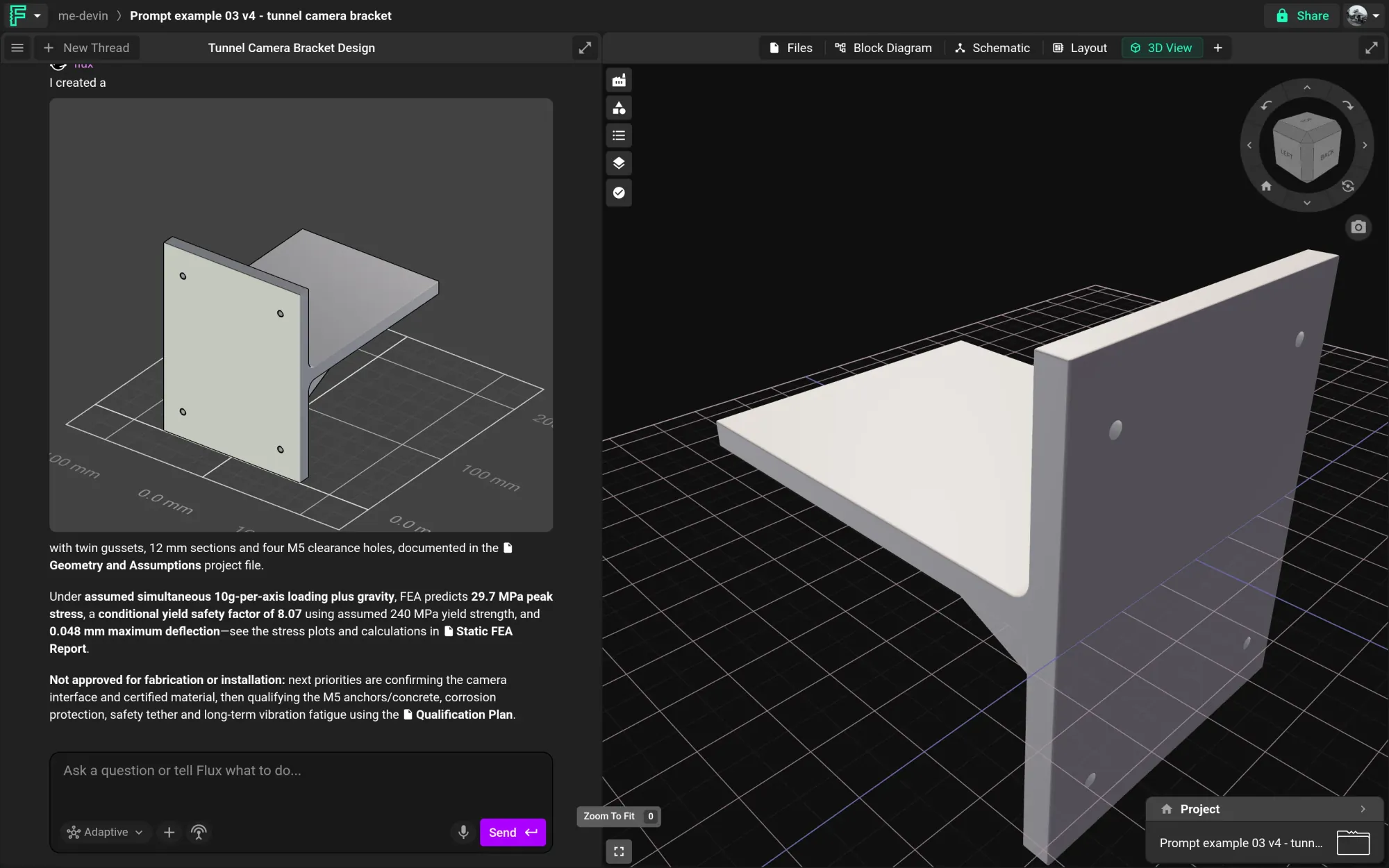
What Flux made: An aluminum bracket as editable CAD code and a STEP file, plus a stress check. Peak stress is 29.7 MPa and the safety factor is 8.07. Flux notes that the wall anchors and the vibration life still need a physical test.
Complete devices from scratch
Example: Water level sensor for farm tanks
We sell to farms that store irrigation water in tanks. Make a Wi-Fi sensor that mounts on a tank, reports the water level every 15 minutes, and runs 6 months on batteries outdoors in rain and sun. Design the board, a weatherproof 3D-printable case, and the firmware. Battery life matters more than size.
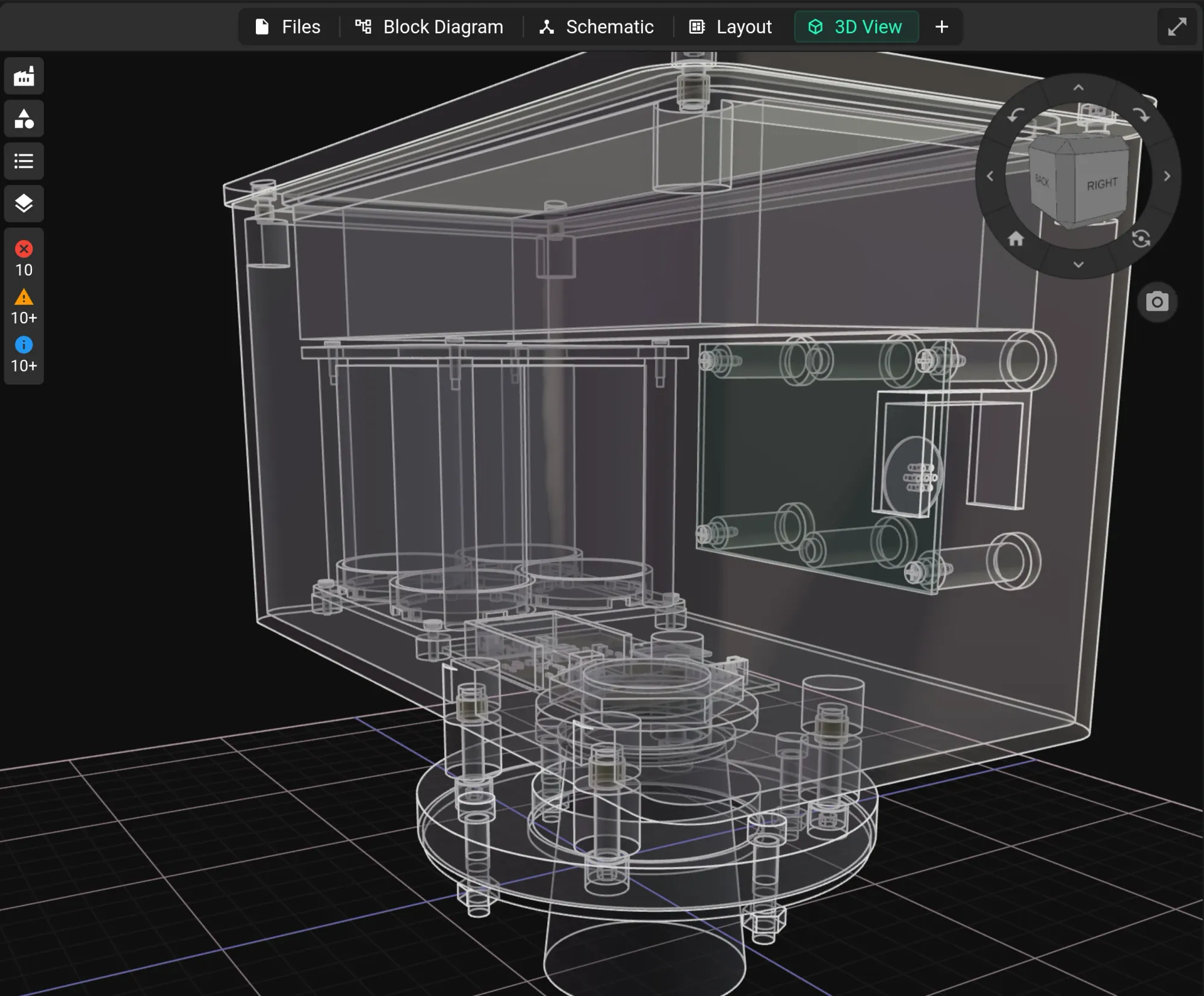
What Flux made: The circuit, a fully routed 80 x 50 mm printed circuit board, a weatherproof 3D-printable case with a tank mount, and compiled firmware. Flux marked the design as a prototype: battery life and rain sealing must be proven in field tests before production.

Edit existing electronics
Example: Replace a part with one that is in stock
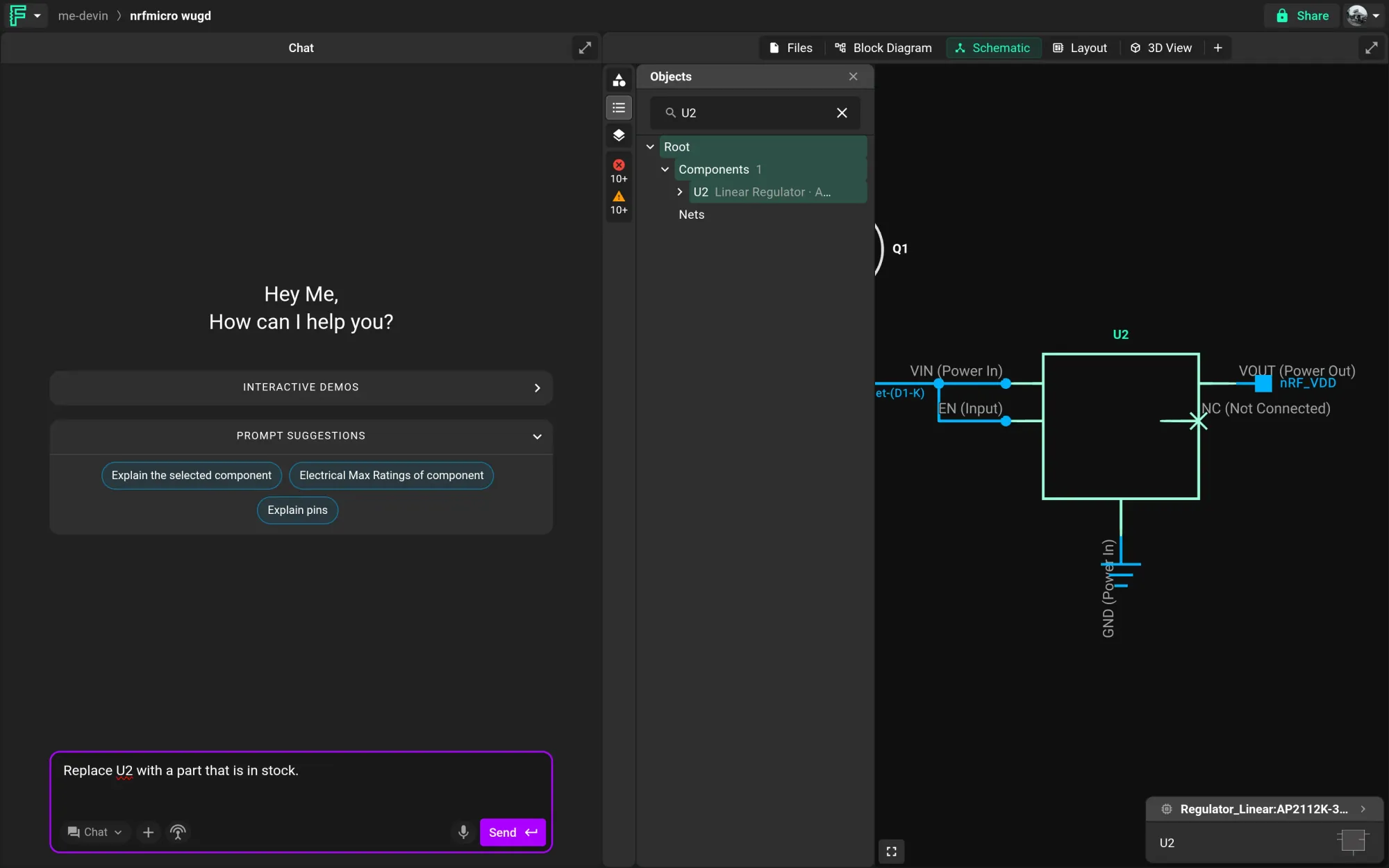
Replace U2 with a part that is in stock.
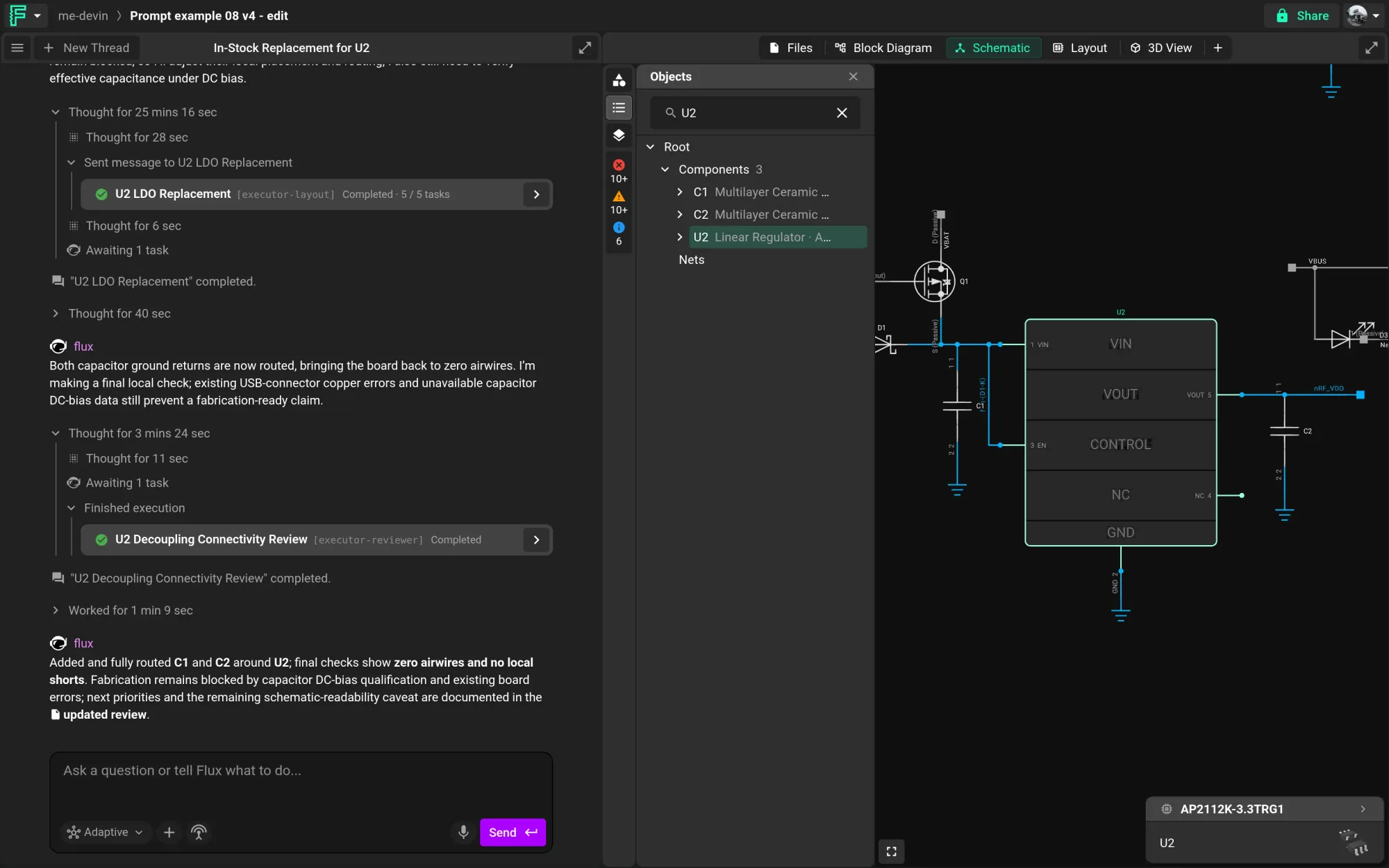
What Flux made: Flux replaced the 3.3 V regulator U2 with an in-stock part, connected it in the schematic, added the two capacitors the new part needs, and routed them on the board. The bill of materials updates automatically.
Edit existing mechanical parts
Example: Make a power supply holder fit a taller power supply
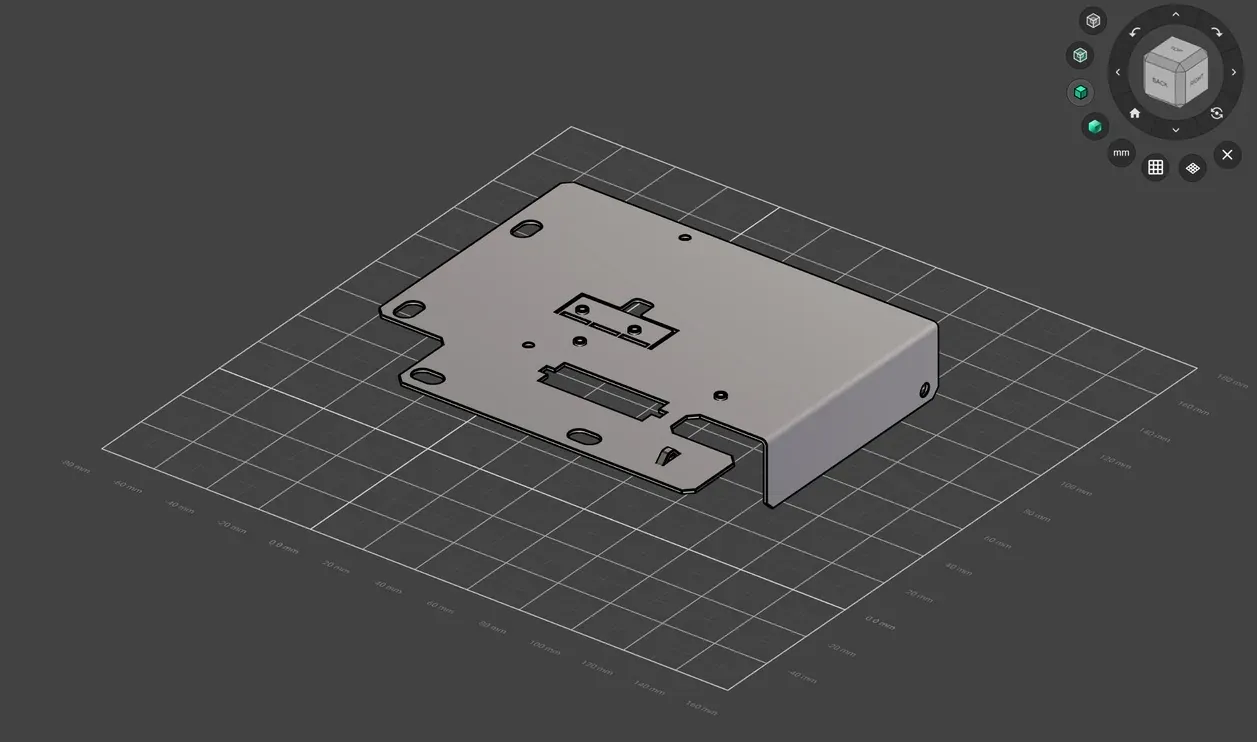
We changed to a power supply that is 40 mm taller, and this holder must still cover it and keep it cool. Change the holder so it covers the new power supply and lets air through. Keep the mounting hole in the flange where it is, so the holder still fits the machine.
What Flux made: Flux made the flange 40 mm deeper, added 8 vent slots, and kept the 4.4 mm mounting hole in the same place. It saved a new STEP file and editable CAD code. The original file stays unchanged.

Example: Make a controller case fit a taller part
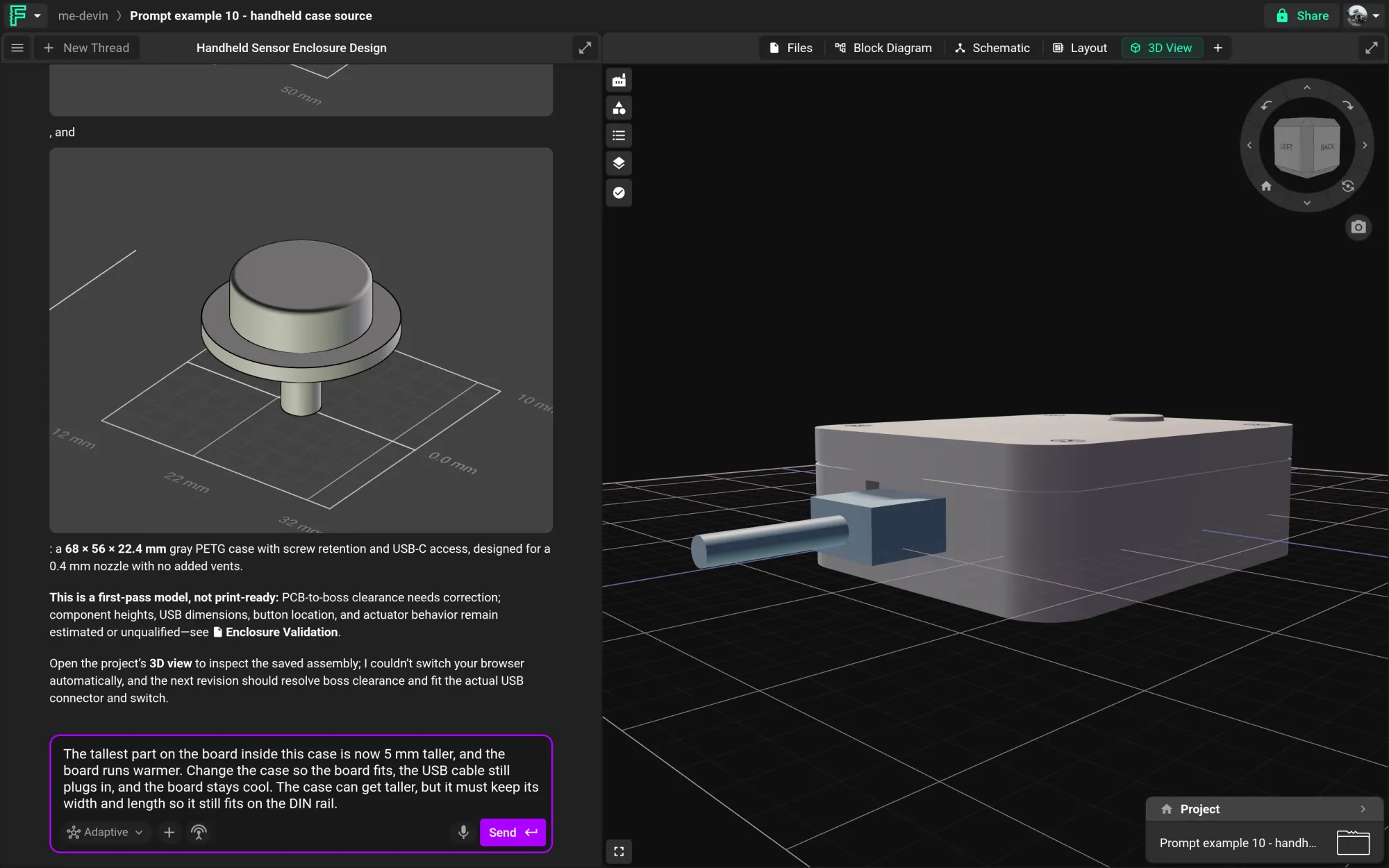
The tallest part on the board inside this case is now 5 mm taller, and the board runs warmer. Change the case so the board fits, the USB cable still plugs in, and the board stays cool. The case can get taller, but it must keep its width and length so it still fits on the DIN rail.
What Flux made: Flux made the case 5 mm taller (68 x 56 x 27.4 mm), kept its width and length so it still fits on the DIN rail, kept the USB opening clear, and added vents in the lid and the sides. Flux flags that the cooling must be confirmed with a temperature test.

Ready to try your own? Describe your product, its limits, and what matters most. Start a project
More in AI & Prompt Engineering for Hardware

What Makes a Perfect PCB Design Prompt

Prompting Guide: Working with Flux from Idea to Schematic

AI Design Reviews

5 Pro Tips for Better Routing with AI Auto-Layout

Top 20+ Flux Copilot Prompts for Hardware Design

Top 20+ Flux Copilot Prompts (Refreshed)

6 Prompting Tips to Get the Most Out of Copilot

Top 9 Most Asked Questions in Flux

Flux Copilot Can Adapt To Your Objectives

Design Circuits with Natural Language: Copilot Upgrade

Teach Copilot How You Work with Knowledge

The First AI Hardware Engineer

AI Shortcuts for PCB Design

Less Clicking, More Building: The New AI-First UI

Introducing the AI Design Review Tab

Introducing AI Auto-Layout

AI Auto-Layout Just Got Smarter

AI Auto-Layout Winter Update

Ditch Datasheets with this Flux Copilot Upgrade

Flux Copilot Can Now See

AI for Firmware Development: How to Code Firmware Faster

Research Components Faster with AI

Streamline Component Research with AI

Instant Hardware Analysis with AI: Meet Copilot's Code Interpreter

AI for Electronics Testing and Debugging

AI for Functional Testing

AI-Driven PCB Cost Optimization

Simulate Circuits with a Prompt

Meet Files: AI-Native Project Documentation (2026 Update)

Flux Copilot: Under the Hood

How AI Is Changing PCB Design: Workflows, Teams, and Tools

Flux Copilot Just Got Smarter

The Future of Flux Copilot

AI-Powered Architecture Design

Flux Copilot - The First AI Powered Hardware Design Assistant

Generative AI for Hardware Design

AI Research & Planning

Smarter Copilot, Cleaner Layouts, Fewer Bugs

Introducing Copilot Knowledge Base for Flux Engineers

Flux + GPT-5 (Beta)

Flux + GPT 6 Astra

Flux + GPT 6.1 SOL

Flux + Opus 5.5

Flux + Fable 5.2 (Preview)

Flux + Gemini 4 Argon

Flux + Gemini 4 Carbon (Preview)

Design hardware in the fast lane with Flux's new steerable agent
Let’s start building.

Let’s build your idea together. All you need to do is describe what you want to make, or what problem you want to solve. Flux will work with you to make it a reality.
