Raspberry Pi Schematics
A Raspberry Pi is a small, affordable, and versatile computer that can be used for a variety of purposes. It has a range of use cases, including: 1. Home media center: The Raspberry Pi can be used to build a home media center, allowing you to stream movies, music, and TV shows to your TV. 2. Desktop computer: With the right accessories, the Raspberry Pi can be used as a desktop computer for everyday tasks such as browsing the internet, creating documents, and playing games. 3. Learning to code: The Raspberry Pi is a great tool for learning to code, with a range of free resources and tutorials available online. 4. Internet of Things (IoT) projects: The Raspberry Pi can be used to build Internet of Things (IoT) projects, such as a smart home system or a weather station. If you're interested in using a Raspberry Pi for your next project, be sure to check out flux.ai, the world's largest community-driven public library of Raspberry Pi footprints, symbols, datasheets, and simulation models. With such a wide range of resources available, you'll have everything you need to get started on your next project.


Raspberry Pi 4B gZEP
The Raspberry Pi 4 Model B is the latest product in the popular Raspberry Pi range of single board computers. It offers ground-breaking increases in processor speed, multimedia performance, memory, and connectivity compared to the prior generation Raspberry Pi 3 Model B+ while retaining backward compatibility and similar power consumption. For the end user, Raspberry Pi 4 Model B provides desktop performance comparable to entry-level x86 PC systems. https://www.raspberrypi.org/documentation/hardware/raspberrypi/schematics/rpi_SCH_4b_4p0_reduced.pdf
0 Uses1 StarsRaspberry Pi Pico Shield Template vsj3
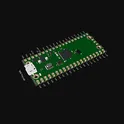
Here's your template for the famous Raspberry Pi Pico Powerful, flexible microcontroller boards, available from $4 The Raspberry Pi Pico series is a range of tiny, fast, and versatile boards built using RP2040 #project-template #template #raspberry #pi #pico
0 Uses1 StarsCheckIt_mini
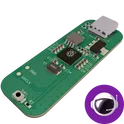
CheckIt is a daily habit tool. When you complete a habit, flip a switch, then an LED lights up. Future work will include wiring the 24pin FPC port to the Pico which causes an e-paper screen to display a message when a switch is flipped. This PCB runs using a Raspberry Pi Pico and has plans to be battery powered similar to a digital alarm clock.
0 Uses1 Stars
solar_wifi_sensor
First project in Flux! Battery-less WiFi-connected IMU breakout for the Raspberry Pi Pico W. This board is intended to plug in on top of a Raspberry Pi Pico W. It uses a solar cell to charge a 1F supercapacitor and provide that to the VSYS pin of the Pico W. It also has an IMU and level shifters.
39 Uses1 StarsRPi TDC
Time-to-Digital converter plug-on module (shield) for Raspberry Pi B+. The board utilizes a TDC7200 (TI) with a time resolution of ~50ps. The Start/Stop inputs to the TDC can be configured with JP2 from either external signals or coming from the RPi's GPIO5 pin in case a timing signal is present at this pin from another plug-on board on the same RPi. Start and Stop signals can be configured from different signals (coming from the input connectors) or the same source (setting "common" on JP3) either supplied from the Start input connector or GPIO5. Read-out of the TDC chip is done through the RPi's SPI bus.
0 Uses1 StarsRaspberry Pi 4B
The Raspberry Pi 4 Model B is the latest product in the popular Raspberry Pi range of single board computers. It offers ground-breaking increases in processor speed, multimedia performance, memory, and connectivity compared to the prior generation Raspberry Pi 3 Model B+ while retaining backward compatibility and similar power consumption. For the end user, Raspberry Pi 4 Model B provides desktop performance comparable to entry-level x86 PC systems. https://www.raspberrypi.org/documentation/hardware/raspberrypi/schematics/rpi_SCH_4b_4p0_reduced.pdf
0 Uses1 StarsRaspberry Pi Pico | End-to-end AI Design Tutorial [Example] 802d
Learn how to design PCBs faster with generative AI in this 20 minute hands-on tutorial. You’ll learn how to use Flux Copilot, an AI-powered hardware design assistant, to research parts, review your design, and even connect components. https://youtu.be/FL7e0OXTLic
0 Uses0 StarsRaspberryPi_Pico_W
Versatile and inexpensive wireless microcontroller module powered by RP2040 dual-core Arm Cortex-M0+ processor up to 133 MHz, 264kB SRAM, 2MB QSPI flash, Infineon CYW43439 2.4GHz 802.11n wireless LAN; also supports Raspberry Pi Pico 2 W RP2350A M33 RISC-V Hazard3 usb wifi bluetooth RaspberryPi?Pico?Common* RaspberryPi?Pico?W?SMD*
1 Uses0 StarsRaspberryPi_Pico_W_Extensive
Versatile and inexpensive wireless microcontroller module (with full pinout for test point and debug connections) powered by RP2040 dual-core Arm Cortex-M0+ processor up to 133 MHz, 264kB SRAM, 2MB QSPI flash, Infineon CYW43439 2.4GHz 802.11n wireless LAN; also supports Raspberry Pi Pico 2 W RP2350A M33 RISC-V Hazard3 usb swd wifi bluetooth RaspberryPi?Pico?W?SMD
0 Uses0 StarsRaspberryPi_Pico_W_Debug
Versatile and inexpensive wireless microcontroller module (with debug pins) powered by RP2040 dual-core Arm Cortex-M0+ processor up to 133 MHz, 264kB SRAM, 2MB QSPI flash, Infineon CYW43439 2.4GHz 802.11n wireless LAN; also supports Raspberry Pi Pico 2 W RP2350A M33 RISC-V Hazard3 usb swd wifi bluetooth RaspberryPi?Pico?W?SMD*
0 Uses0 StarsRaspberryPi_Pico_Extensive
Versatile and inexpensive microcontroller module (with full pinout for test point and debug connections) powered by RP2040 dual-core Arm Cortex-M0+ processor up to 133 MHz, 264kB SRAM, 2MB QSPI flash; also supports Raspberry Pi Pico 2 RP2350A M33 RISC-V Hazard3 usb swd RaspberryPi?Pico?SMD
0 Uses0 Stars