ESP32 Schematics
The ESP32 is a low-cost, low-power microcontroller with built-in Wi-Fi and Bluetooth capabilities. It is a highly integrated chip designed for the Internet of Things (IoT) and can be used for a variety of applications, including home automation, wearable technology, and industrial control. One of the key features of the ESP32 is its versatility and wide range of available peripherals, including sensors, displays, and communication modules. This makes it ideal for use in a variety of projects and applications, such as home security systems, smart home devices, and industrial automation systems. Flux.ai has the world's largest community-driven public library of ESP32 devices, with a range of footprints, symbols, datasheets, and simulation models available for users. This extensive library allows developers and designers to easily incorporate the ESP32 into their projects and take advantage of its powerful capabilities. Whether you are building a simple IoT device or a complex industrial control system, the ESP32 is an excellent choice due to its versatility and wide range of available resources.

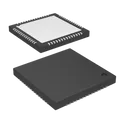
ESP32-S3R8
IC RF TxRx + MCU Bluetooth, WiFi 802.11b/g/n, Bluetooth v5.0 2.412GHz ~ 2.484GHz 56-VFQFN Exposed Pad The ESP32-S3R8 is a high-performance wireless microcontroller system-on-chip manufactured by Espressif Systems. This device integrates dual-core processing, Wi-Fi connectivity, Bluetooth Low Energy communication, embedded memory resources, and advanced peripheral interfaces within a compact package optimized for embedded and IoT applications. The microcontroller is based on the Xtensa LX7 architecture and is designed to support edge computing, wireless communication, human-machine interfaces, audio processing, AI acceleration, and low-power connected systems. The ESP32-S3R8 includes integrated flash and RAM resources, advanced security functions, vector instruction acceleration, and extensive GPIO/peripheral capability for modern embedded development. The device is widely used in IoT devices, industrial automation systems, smart home equipment, wearable electronics, wireless sensor nodes, edge AI applications, USB-enabled embedded systems, and portable consumer electronics. Its integrated wireless functionality and high processing performance reduce external component count while simplifying system-level design for connected embedded platforms. Engineering Specification Device Type Wireless microcontroller system-on-chip Processor Architecture Dual-core Xtensa LX7 microcontroller architecture Wireless Connectivity Integrated Wi-Fi and Bluetooth Low Energy communication Processing Features High-performance embedded processing with vector instruction acceleration Memory Resources Integrated RAM and embedded memory architecture Communication Interfaces SPI I2C UART I2S USB PWM ADC GPIO interfaces Wireless Features Secure wireless networking and low-power communication support USB Capability Integrated USB communication and device functionality AI and DSP Features Vector instruction support for AI and digital signal processing workloads Security Features Hardware encryption and secure boot support Power Characteristics Low-power operating modes for battery-powered systems Package Type QFN surface-mount package Mounting Style Surface mount technology Applications IoT devices Wireless embedded systems Industrial automation Smart home electronics Edge AI applications Wearable devices Consumer electronics USB-enabled systems Sensor networks Embedded communication platforms Manufacturer Espressif Systems #commonpartslibrary #esp32 #esp32s3 #wirelessmcu #microcontroller #iot #embeddedhardware #wifi #bluetoothlowenergy #espressif #surfaceountcomponents #electronicsdesign #edgeai #wirelesscommunication #consumerelectronics
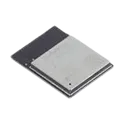
101 Uses0 StarsESP32-S3-MINI-1-N8
ESP32-S3-MINI-1-N8 is a compact, low-power Wi-Fi and Bluetooth module from Espressif Systems based on the ESP32-S3 SoC. It integrates a dual-core Xtensa LX7 processor, 8 MB flash memory, crystal oscillator, RF matching circuitry, and a PCB antenna in a small SMD package, making it ideal for IoT devices, smart home products, industrial automation, HMI applications, AIoT edge devices, and USB-connected embedded systems. Key Features Dual-core 32-bit Xtensa LX7 CPU Up to 240 MHz operating frequency Includes single-precision floating-point unit (FPU) for enhanced processing performance. Integrated Memory 8 MB Quad SPI Flash (N8 variant) 512 KB SRAM 384 KB ROM 16 KB RTC SRAM. Wireless Connectivity 2.4 GHz Wi-Fi 4 (802.11 b/g/n) Data rates up to 150 Mbps Bluetooth 5 LE with Bluetooth Mesh support Simultaneous Wi-Fi and Bluetooth operation through an integrated coexistence mechanism. Rich Peripheral Set Up to 39 GPIOs USB 2.0 OTG USB Serial/JTAG SPI, I²C, I²S, UART PWM, MCPWM SDIO Host ADC Touch sensing Temperature sensor TWAI® (CAN 2.0 compatible) Timers and watchdogs. Integrated Components On-board 40 MHz crystal oscillator PCB antenna RF matching network Compact certified module design. Operating Conditions Supply voltage: 3.0 V to 3.6 V Operating temperature: −40°C to +85°C. Compliance RoHS and REACH compliant RF-certified module for simplified product development. #RF_transceiver #Module #Esp32
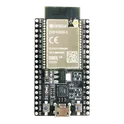
796 Uses0 StarsESP32-DevKitC
The ESP32-DevKitC is an official ESP32-based development board from Espressif Systems designed for rapid prototyping and IoT application development. It integrates an ESP32 module (such as ESP32-WROOM-32E or ESP32-WROVER variants), USB-to-UART programming interface, power regulation circuitry, reset and boot buttons, and access to most ESP32 GPIOs through dual-row headers. The board is breadboard-friendly and supports wireless connectivity, making it suitable for smart devices, industrial monitoring, home automation, wearable electronics, and embedded control systems. Key Features ESP32 Dual-Core Processor Xtensa® 32-bit LX6 dual-core MCU Up to 240 MHz clock frequency High-performance embedded processing capability. Wireless Connectivity Integrated 2.4 GHz Wi-Fi (802.11 b/g/n) Bluetooth Classic (BR/EDR) and Bluetooth Low Energy (BLE) support. Memory Typically includes 4 MB SPI Flash Some variants provide additional PSRAM for memory-intensive applications. Rich Peripheral Interfaces UART, SPI, I²C, I²S, SDIO ADC and DAC PWM outputs Capacitive touch sensing Pulse counter and timer peripherals. Extensive GPIO Access Most ESP32 pins are broken out to headers Supports digital I/O, interrupts, analog inputs, and communication interfaces. Development-Friendly Hardware USB-to-UART bridge for programming and debugging Dedicated EN (Reset) and BOOT buttons On-board 3.3 V regulator Breadboard-compatible layout. Flexible Power Options Powered through Micro-USB and onboard power circuitry Supports external power connections through header pins. #DevelopmentBoard
183 Uses0 Stars