ESP32-S3 Schematics
The ESP32-S3 is Espressif's dual-core Xtensa LX7 microcontroller with 2.4 GHz Wi-Fi and Bluetooth 5 (LE). It adds vector instructions for AI and signal-processing workloads, native USB OTG, and up to 45 programmable GPIOs, making it a popular choice for camera, display, voice, and other edge AI devices. Common modules and boards include the ESP32-S3-WROOM-1, ESP32-S3-MINI-1, ESP32-S3-DevKitC-1, and the Seeed Studio XIAO ESP32-S3. They are used in smart home controllers, wearables, HMI panels with SPI or RGB displays, and battery-powered IoT sensors. Flux.ai has a large community-driven public library of ESP32-S3 parts, modules, and reference designs, with footprints, symbols, datasheets, and 3D models, so you can drop the ESP32-S3 into a schematic and PCB and start designing right away.
BatteryTester v1
Automated NiCad battery tester for calibration lab. Tests all 12 cells of a meter's battery pack in situ (no disconnect) under a 150 ▎ Ω / 15-min timed load. Per-cell measurement via 13 pogo contacts (7 rail + 6 V-gap junctions) into 4× ADS1115 over I²C. ESP32-S3 controls a logic-level MOSFET for load ▎ switching. Wirelessly prints PCL5 reports to an HP printer and ZPL labels to a Zebra. Production target: 10–12 units. Bench rig already validated; this is the production PCB.
0 Uses0 StarsOMGS3-01
OMGS3 ultra-compact ESP32-S3 board/module, based on dual-core Xtensa LX7 32-bit processor up to 240MHz with RISC-V ultra-low-power coprocessor, 2.4GHz Wi-Fi 802.11b/g/n and Bluetooth LE 5.0, 8MB QSPI Flash and 2MB QSPI PSRAM, integrated 3D high-gain antenna, RGB LED, PMIC, MAX17048G+T10 fuel gauge, 700mA 3.3V LDO regulator, LiPo battery charging, native USB and USB Serial/JTAG support, Qwiic/QT connector, 17 GPIOs, ultra-low deep sleep current, compact 25 x 10mm size. Search Keywords: OMGS3, Unexpected Maker OMGS3, ESP32-S3 module, ESP32-S3 board, ultra compact ESP32-S3, ESP32-S3 WiFi Bluetooth board, ESP32-S3 8MB flash 2MB PSRAM, ESP32-S3 LiPo charger, ESP32-S3 fuel gauge, MAX17048 fuel gauge, Qwiic ESP32-S3 board, tiny ESP32-S3 module Hashtags: #OMGS3 #UnexpectedMakerOMGS3 #ESP32S3 #ESP32S3Board #ESP32S3Module #WiFiBluetoothBoard #BLE5 #8MBFlash #2MBPSRAM #LiPoCharger #FuelGauge #MAX17048 #QwiicConnector #TinyESP32S3 #IoTModule
3 Uses0 StarsCONTROL_RF_PCB
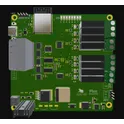
Production-prototype ESP32-S3 control/RF/GNSS/sensor board for an outdoor livestock collar. Includes LoRa 915 MHz, GNSS, I2C/I2S sensors, local actuator drivers, battery-cell solder pads, solar pass-through, soldered flex-tail zones, HV electrode isolation, test points, and a 120 mm x 80 mm 4-layer FR4 target stackup.
0 Uses0 StarsXIAO Lapel Audio Recorder CNC Prototype
70x50 mm CNC-friendly raw-laminate XIAO ESP32S3 lapel audio recorder prototype with socketed XIAO, dual external INMP441 microphones, LiPo connector, button/status LED, and SD-card recording support. Layout prioritizes hand soldering, replaceable parts, wide traces, and generous isolation clearances over compactness.
0 Uses0 StarsESP32-S3-PICO-1-N8R8
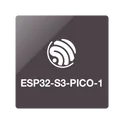
The ESP32-S3-PICO-1-N8R8 is a highly integrated System-in-Package (SiP) module from Espressif based on the ESP32-S3 SoC. It is designed for compact, low-power IoT applications requiring strong wireless performance, rich peripherals, and minimal external components. This variant (N8R8) integrates 8 MB of SPI flash and 8 MB of PSRAM, making it suitable for memory-intensive applications such as AIoT, voice processing, and graphical user interfaces. The module integrates RF circuitry, crystal oscillator, power management, and memory into a single package, significantly reducing PCB size and BOM cost while improving reliability. ⚡ Key Features Processor & Performance Dual-core Xtensa LX7 microprocessor Up to 240 MHz clock speed Hardware acceleration for AI/ML and vector operations Memory 8 MB SPI Flash 8 MB PSRAM Internal SRAM for fast access tasks Wireless Connectivity 2.4 GHz Wi-Fi 802.11 b/g/n Bluetooth 5 (LE) support Integrated RF front-end Peripherals GPIO, SPI, I2C, UART, ADC, PWM USB 1.1 OTG support RMT, I2S, SD/MMC interface Touch sensor support Power & Efficiency Low-power sleep modes for battery-powered devices Integrated power management circuitry (SiP-level integration) Wide operating voltage: 3.0V – 3.6V Integration Advantages Built-in crystal oscillator Integrated RF matching components Reduced external component count (SiP design) Compact footprint for space-constrained designs 📌 Typical Applications Smart home devices IoT sensors and controllers Voice-enabled AI devices Wearables HMI (Human Machine Interface) Industrial monitoring systems
7 Uses0 Stars