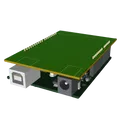
Arduino Schematics
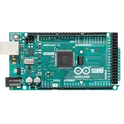
Arduino is an open-source electronics platform based on easy-to-use hardware and software. It is designed for anyone to use, regardless of their level of expertise in electronics. Arduino boards are commonly used for a wide range of projects, including building DIY devices, controlling home appliances, creating interactive art installations, and more. One of the key benefits of Arduino is its community-driven nature. There are a plethora of resources available online for those looking to learn more about Arduino or troubleshoot problems they may encounter while working on a project. Flux.ai has the world's largest community-driven public library of Arduino footprints, symbols, datasheets, and simulation models. This makes it an invaluable resource for those looking to take their Arduino projects to the next level. Whether you're a beginner or a seasoned pro, Flux.ai has something to offer.

Electronic Chess Board
An Arduino based electronics chess board, which is great for real time control of the devices on the chess board, but it does not use a conventional operating system like Unix/Debian/Raspian. Therefore Stockfish and most other strong chess engines won’t run on it. I believe there are a few chess engines that do run on Arduino http://chessprogramming.wikispaces.com/Arduino , but they will not be as strong as Stockfish.
0 Uses1 StarsArduino blood glucose meter shield
Glucose meter is a medical device that determines the approximate concentration of glucose in the blood. A strip containing chemicals that react with glucose in the drop of blood is used for each measurement. Op Amp Circuit description: LMC6484 IC_D is an integrator circuit. LMC6484 IC_A and IC_C are configured as unity gain buffer amplifiers. LMC6484 IC1B is configured as a trans impedance amplifier. Arduino is used for processing of the measured glucose level. The Arduino use the built in ADC module for analog to digital conversion. Further, the Arduino helps to detect the strip also.
0 Uses1 StarsLM7812T
Three-Terminal Fixed Positive Voltage Regulator The LM7812T is a three-terminal fixed positive linear voltage regulator IC designed to provide a stable +12V DC output from a higher input voltage source. It belongs to the widely used 78xx series regulators, where “12” indicates the fixed output voltage of 12 volts. It is commonly used in power supply circuits, embedded systems, and electronic devices that require a simple, reliable regulated 12V rail without the complexity of external components. The device operates as a linear regulator, meaning it reduces voltage by dissipating excess energy as heat, so proper heatsinking is often required for higher current loads. Key Features of LM7812T Fixed +12V output voltage Output current up to 1A–1.5A (depending on package and cooling) Input voltage range up to ~35V max Built-in thermal shutdown protection Internal current limiting and short-circuit protection Safe-area compensation for reliable operation No external components required for basic operation Good line and load regulation Low quiescent current (~8 mA typical) Available in TO-220 / TO-3 packages (LM7812T variants) Typical Applications DC power supplies (12V regulated rail) Arduino and microcontroller systems Industrial control electronics Sensor and communication circuits Battery-powered systems requiring stable 12V Audio amplifiers and small motor control circuits #CommonPartsLibrary #IntegratedCircuit #PowerManagement
96 Uses0 StarsUltrasonic Distance Meter Module
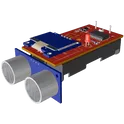
This circuit is an ultrasonic distance meter based on an ATTiny2313 microcontroller. It uses an HC-SR04 ultrasonic sensor to measure distance and displays the results on an OLED display. The power supply is constructed using a Boost converter (TPS613222A) and a 2-cell AA battery. Additionally, it also includes ISP for programming, RESET and START switches, and LED indicators. #project #Template #projectTemplate #ultrasonic #OLED #arduino #attiny2313 #TPS613222A #ISP #reusable #module #simple-embedded #microchip #sublayout
0 Uses0 StarsArduino Uno R3 Shield Template
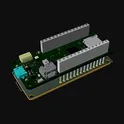
Template for Arduino Uno R3 Shield. Include an official pinout so you will always know Arduino names, the alternative roles of pins, which one is SDA, or SCL, etc. On PCB you can find the 3D model of the Arduino Uno R3 itself along with the board outline on the silkscreen. #Arduino #Uno #Shield #Template #project-template #project
0 Uses0 StarsDLS24035B
This 3.5-inch SPI interface TFT LCD module features the high-performance ILI9488 driver chip, supporting a resolution of 480x320 and a 65K color display. It communicates via the SPI protocol, requiring only a few IO ports to power on. The module has an SD card slot and offers a GPIO expansion interface, lowering the barrier for embedded development. The touch functionality is optional and is compatible with mainstream development boards such as STM32 and Arduino. It is suitable for applications in industrial HMI, smart home control panels, portable devices, and more.
6 Uses0 StarsB2B-PH-K-S
JST PH Connector Header Through Hole 2-pin 0.079" (2.00mm) battery connector JST PH 2 pin The B2B-PH-K-S is a 2-position vertical header connector with a 2.0 mm pitch, designed for mating with JST PH series crimp housings (e.g., PHR-2). It is commonly used in consumer electronics, battery connections, and small embedded systems due to its compact size and secure locking mechanism. Key Features Series: JST PH Series Number of Pins: 2 Pitch: 2.0 mm Mounting Type: Through-hole (vertical) Contact Type: Male pin header Mating Type: Friction lock (secure connection) Current Rating: ~2 A (typical, depends on wire and conditions) Voltage Rating: ~100 V Contact Material: Copper alloy (tin-plated) Housing Material: UL94V-0 rated plastic (flame-retardant) Operating Temperature: Typically -25°C to +85°C Typical Applications Battery connectors (Li-ion/LiPo packs) Power supply connections in small devices Embedded systems (e.g., Arduino, sensors) Consumer electronics (fans, LEDs, small appliances) #CommonPartsLibrary #Connector #Header #JST-PH
2.3k Uses0 Stars