Sensors
A sensor is a device that detects and measures a physical property or phenomenon, such as temperature, pressure, or motion. Sensors are used in a wide range of applications, including industrial automation, environmental monitoring, healthcare, and transportation. Flux.ai is the world's largest community-driven public library of sensors, with footprints, symbols, datasheets, and simulation models. Our extensive collection of sensors covers a variety of use cases and industries, making it easy to find the perfect sensor for your application. Whether you need a temperature sensor for HVAC systems, a pressure sensor for automotive applications, or a motion sensor for security systems, Flux.ai has you covered. Our comprehensive library of sensors is constantly updated with the latest and most innovative technologies, ensuring that you have access to the best sensors available. So, if you need a sensor for your next project, be sure to check out Flux.ai and take advantage of our extensive collection and expert support.
2.54-1*4P母
CONN SOCKET 4POS 2.54mm SINGLE ROW TH This connector consists of a single row of 4 electrical pins spaced 2.54 mm apart. It is typically available as a male pin header, female header, or wafer connector depending on the application. The part is commonly used for power, signal, UART, GPIO, sensor, and programming connections in embedded systems and prototyping. Key Features 2.54 mm pitch spacing Industry-standard spacing compatible with breadboards and jumper wires 1x4 configuration Single row with 4 contacts/pins Compact PCB connection solution Suitable for board-to-board or wire-to-board applications Easy solder mounting Typically through-hole (THT), though SMT variants may exist Wide compatibility Works with Arduino, Raspberry Pi modules, sensors, and development boards Durable metal contacts Usually tin- or gold-plated for reliable electrical connection Multiple orientations available Straight vertical or right-angle versions Low-cost and widely available Commonly used in consumer electronics and DIY projects Common Applications GPIO and sensor connections UART / serial interfaces Power input/output headers Embedded system prototyping Module interconnections Debug and programming interfaces #CommonPartsLibrary #Connector
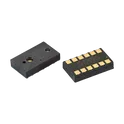
1.0k Uses1 StarsVL6180XV0NR/1
Optical Sensor 0 ~ 24.41" (0 ~ 62cm) I2C Output Optical Time-of-Flight (ToF) proximity sensor with an integrated infrared emitter, designed for absolute distance measurement, ambient light sensing, and gesture detection. Operates from a 2.6 V to 3.5 V supply, measures distances up to 100 mm, features an I²C interface (up to 400 kHz), and integrates an 850 nm VCSEL, ranging sensor, ambient light sensor (ALS), and signal processing. Housed in a compact 4.8 × 2.8 × 1.0 mm LGA-12 package. #TimeOfFlight #ToFSensor #ProximitySensor #AmbientLightSensor #GestureDetection #I2C #VCSEL #InfraredSensor #STMicroelectronics #LGA12 #commonpartslibrary #sensor
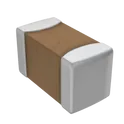
22 Uses1 StarsNCP15XH103F03RC
NTC Thermistor 10k 0402 (1005 Metric) NTC thermistor designed for temperature sensing and compensation in electronic circuits. It provides a 10 kΩ nominal resistance at 25°C, ±1% resistance tolerance, and a B constant of 3380 K (25/50°C). The device is housed in a 0402 (1005 metric) SMD package with an operating temperature range of −40°C to +125°C. #TemperatureSensor #TemperatureCompensation #10kOhm #3380K #0402 #SMD #MurataElectronics #CommonPartsLibrary #Sensor #Transducer #NTC-Thermistor #NCP15XH
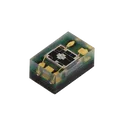
110 Uses1 StarsVEML6075
Optical Sensor Ultraviolet (UV) 330nm, 365nm I²C 4-TFLGA UV light sensor with integrated UVA and UVB photodiodes, designed to measure ultraviolet intensity and calculate a UV index through an I²C interface. It operates from a 1.7 V to 3.6 V supply, features a 16-bit ADC, programmable integration time and dynamic range, built-in signal processing with UV compensation, and is housed in a compact 4-pin OPLGA package suitable for space-constrained applications. #commonpartslibrary #sensor #opticalsensor
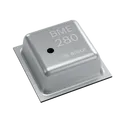
13 Uses1 StarsBME280
Humidity, Pressure, Temperature 0 ~ 100% RH I²C, SPI ±3% 1 s Surface Mount BME280 I2C breakout module The BME280 integrates three sensors—temperature, relative humidity, and pressure—along with a high-performance digital interface. It communicates via I²C or SPI, making it easy to interface with microcontrollers like Arduino, ESP32, and STM32. It is designed for low power consumption, making it suitable for battery-powered applications such as portable weather stations and smart home devices. Key Features Environmental Sensing Measures: Temperature Relative Humidity Barometric Pressure Enables altitude estimation based on pressure readings High Accuracy Temperature: ±1.0°C (typical) Humidity: ±3% RH (typical) Pressure: ±1 hPa (typical) Low Power Consumption Typical current: ~0.6 µA (sleep mode) ~3.6 µA (measurement mode) Ideal for battery-operated devices Communication Interfaces Supports: I²C (up to 3.4 MHz) SPI (3-wire / 4-wire) Easy integration with most microcontrollers Compact Package Small footprint: 2.5 × 2.5 × 0.93 mm LGA package Suitable for space-constrained designs Built-in Features Factory-calibrated coefficients stored in NVM Configurable oversampling and filtering Integrated ADC for high-resolution measurements #commonpartslibrary #sensor #humidity #pressure
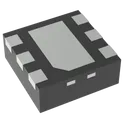
345 Uses1 StarsTMP117AIDRVR
Temperature Sensor Digital, Local -55°C ~ 150°C 16 b 6-WSON (2x2) The TMP117AIDRVR is a high-precision digital temperature sensor manufactured by Texas Instruments. The device provides accurate temperature measurements through an I²C-compatible digital interface and is optimized for applications requiring medical-grade accuracy, low power consumption, and compact PCB footprint. The sensor integrates a precision temperature sensing element, analog-to-digital converter, calibration memory, and digital interface into a single compact package. The device supports continuous conversion and shutdown operating modes, enabling efficient thermal monitoring in battery-powered and always-on systems. Internal calibration minimizes external component requirements while providing highly linear and repeatable temperature measurements across an extended operating range. The TMP117AIDRVR is commonly used in industrial controls, wearable electronics, healthcare equipment, environmental monitoring systems, battery management systems, consumer electronics, and precision instrumentation. Electrical Characteristics Supply voltage supports low-voltage digital systems and portable electronics applications. Ultra-low operating current enables long battery life in energy-sensitive designs. Integrated EEPROM allows programmable offset correction and configuration storage. Digital output eliminates the need for external ADC circuitry. High measurement resolution supports precision thermal monitoring applications. Low self-heating characteristics improve measurement stability and accuracy. Functional Features High-accuracy digital temperature sensing. I²C and SMBus compatible communication interface. Programmable alert functionality for thermal threshold monitoring. Continuous conversion and low-power shutdown operating modes. Integrated non-volatile memory for user configuration storage. Wide operating temperature range for industrial and commercial environments. Fast conversion timing suitable for real-time monitoring systems. Factory-calibrated performance requiring minimal external calibration. Package Information Package type is WSON with compact surface-mount footprint suitable for dense PCB layouts. Moisture-sensitive package designed for automated assembly processes. Lead-free and RoHS-compliant construction. Typical Applications Medical thermometers and patient monitoring systems. Industrial temperature monitoring equipment. Battery-powered portable electronics. HVAC and environmental sensing systems. Data acquisition and instrumentation systems. Server and embedded thermal management applications. Consumer electronics requiring precision thermal sensing. #commonpartslibrary #integratedcircuit #temperaturesensor
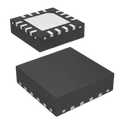
431 Uses1 StarsADXL335BCPZ
Accelerometer X, Y, Z Axis ±3g 1.6kHz (X,Y), 550Hz (Z) 16-LFCSP-LQ (4x4) The ADXL335BCPZ is a small, thin, low-power, complete 3-axis accelerometer with signal-conditioned voltage outputs. It measures acceleration with a minimum full-scale range of ±3 g. The device outputs analog voltages proportional to acceleration in each of the three orthogonal axes (X, Y, and Z). The accelerometer is designed for low power consumption and high resolution, making it suitable for mobile devices, tilt sensing, motion detection, and vibration monitoring. It operates over a wide temperature range and requires minimal external components, enabling easy integration into compact systems. Functional Overview The ADXL335 uses a capacitive sensing structure to detect acceleration. Changes in acceleration result in differential capacitance changes, which are converted into voltage outputs through an internal signal conditioning circuit. Each axis provides an independent analog output that can be directly interfaced with ADC inputs of microcontrollers or other processing units. Bandwidth for each axis can be adjusted using external capacitors, allowing flexibility depending on application requirements. Electrical Characteristics Supply Voltage Range: 1.8 V to 3.6 V Supply Current: Typical: 350 µA Measurement Range: ±3 g Sensitivity (Typical): 300 mV/g Zero-g Bias Level: Approximately mid-supply voltage Bandwidth: User-selectable via external capacitors Typical range: X, Y axes: up to 1600 Hz Z axis: up to 550 Hz Output Characteristics Output Type: Analog voltage (ratiometric to supply voltage) Number of Axes: Three (X, Y, Z) Output Noise: Low noise suitable for precision motion sensing Cross-Axis Sensitivity: Typically ±1% Mechanical Characteristics Package Type: 16-lead LFCSP (Lead Frame Chip Scale Package) Dimensions: Approximately 4 mm × 4 mm × 1.45 mm Mounting: Surface mount Environmental Specifications Operating Temperature Range: −40°C to +85°C Shock Survivability: Up to 10,000 g Interface Requirements External Components: Requires capacitors for bandwidth setting (one per axis) Output Interface: Direct analog output compatible with ADC inputs Applications Mobile devices and handheld electronics Tilt and orientation sensing Vibration monitoring systems Gaming and motion input devices Industrial instrumentation Wearable electronics Key Features Low power consumption Compact form factor High resolution analog outputs User-adjustable bandwidth Wide operating temperature range Simple integration with minimal external components #commonpartslibrary #sensor #transducer #motionsensor #accelerometer
58 Uses1 Stars